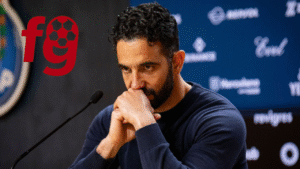
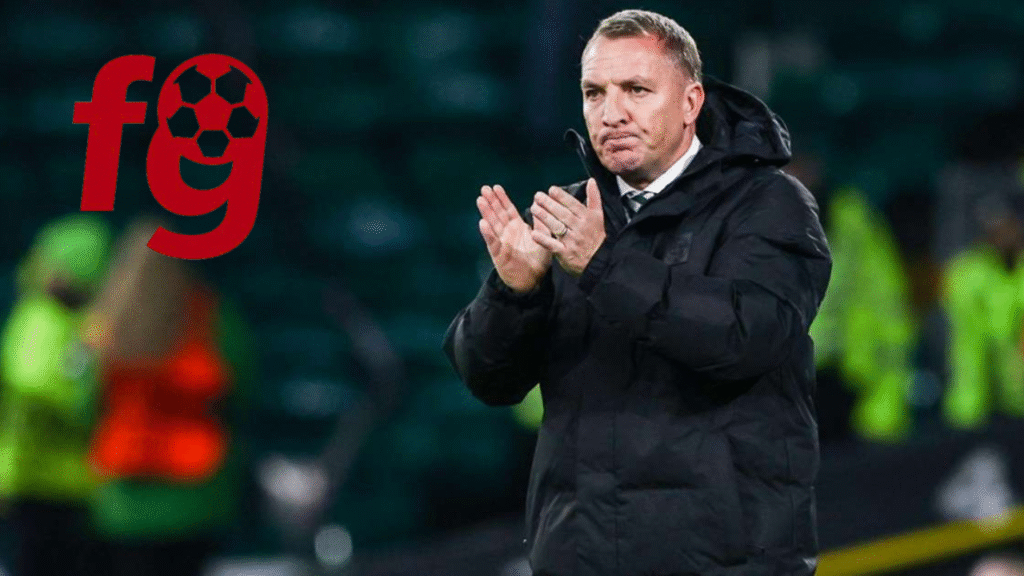
Brendan Rodgers And Celtic Were On The Brink Of Separation, Yet Discord Could Have Been Averted.
It is likely that Martin O’Neill was unaware of the events that were about to unfold when, during a radio show on a Monday, he expressed confidence in Hearts’ chances of securing the Scottish championship for the first time since 1960. “Now is the moment for Hearts,” O’Neill remarked.
The impact of Brendan Rodgers’s resignation is so significant that Martin O’Neill’s return to the Celtic management position is not the most noteworthy aspect. Rather, it was the reclusive Dermot Desmond who emerged to fiercely criticize Rodgers.
This denunciation seemed both personal and vindictive. It marked a disappointing and unsightly end to Rodgers’s second tenure in Glasgow. The situation has escalated to the point where the third most successful manager in Celtic’s history is now unable to appear at the stadium. Desmond seems to be a formidable adversary to confront.
It is likely that Martin O’Neill was unaware of the events that were about to unfold when, during a radio show on a Monday, he expressed confidence in Hearts’ chances of securing the Scottish championship for the first time since 1960. “Now is the moment for Hearts,” O’Neill remarked.
The impact of Brendan Rodgers’s resignation is so significant that Martin O’Neill’s return to the Celtic management position is not the most noteworthy aspect. Rather, it was the reclusive Dermot Desmond who emerged to fiercely criticize Rodgers.
Brendan Rodgers And Celtic Conflict
This denunciation seemed both personal and vindictive. It marked a disappointing and unsightly end to Rodgers’s second tenure in Glasgow. The situation has escalated to the point where the third most successful manager in Celtic’s history is now unable to appear at the stadium. Desmond seems to be a formidable adversary to confront.
Desmond attributes the “fueling” of fan protests against the board to Rodgers, which has become a consistent part of this tumultuous season. “The level of abuse directed towards them and their families has been completely unwarranted and unacceptable,” stated Desmond. At 75 years old, he is right to denounce such behavior, yet much of the dissatisfaction among Celtic supporters has been expressed in a reasonable and fitting manner.
Desmond’s criticism of Rodgers is unlikely to soothe those who are unhappy. “Typically, it’s the manager who departs when those chants begin,” Rodgers mentioned during the “sack the board” shouts in late August. He faced ridicule at that moment; however, he was correct.
The board members have no intention of changing how Celtic is managed, primarily because they believe such a change is unnecessary. “Celtic’s model – where the manager handles football matters, the chief executive oversees operations, and the board ensures oversight – has brought the club considerable success for over twenty years, Desmond remarked. “The recent failures were not due to our structure or model, but rather stemmed from one person’s wish to protect themselves at the cost of others. ”
It is important to note that the prior chief executive of Celtic remained in his position for just two months. Non-executive directors often serve for several years, if not decades. Desmond possesses slightly more than 30% of Celtic; the bulletin shared on Monday night came from a person with complete authority.
The level of success that Desmond mentions is entirely reasonable within a national framework. There have been some positive moments in Europe – particularly last season – yet Celtic’s ongoing failures in that arena weaken his argument. These difficulties have occurred under multiple coaches; Kairat Almaty eliminated Celtic from Champions League qualifying two months prior, similar to the actions of Bodø/Glimt, Ferencvaros, Cluj, AEK Athens, Maribor, and Malmö since 2014. This season, Bodø/Glimt, Pafos, Slavia Prague, and Union St-Gilloise are participating in the Champions League.
Celtic presents themselves as a prominent club, and indeed, they are in several ways. In Rodgers’s last European match, the victory over Sturm Graz last week, he fulfilled his media responsibilities in the usual setting of a high-profile area in the parking lot. Celtic supporters are likely indifferent to how the media is accommodated – in fact, many may take pleasure in the simplicity of the arrangements – but this highlights a more widespread perception of a minor league atmosphere.
The challenge with criticizing Rodgers – a sentiment shared by many even before he stepped down – is that none of these issues could have been part of his strategy. He certainly would not have wanted this second tenure to conclude so negatively, nor would he have chosen to return while disregarding more financially advantageous options.
The concept of a third-season slump does not sufficiently account for why a squad that challenged Bayern Munich in February seemed to have lost steam by the time of their Scottish Cup defeat to Aberdeen in May without receiving proper revitalization.
Celtic secured their title with weeks, if not months, to go. Their spot for Champions League qualifiers was already determined. Rodgers’s feelings of annoyance regarding the absence of attacking support, not just over the summer but also in January, were justifiable.